
Lenticular Cards
Cards That Flip, Animate & Capture Attention


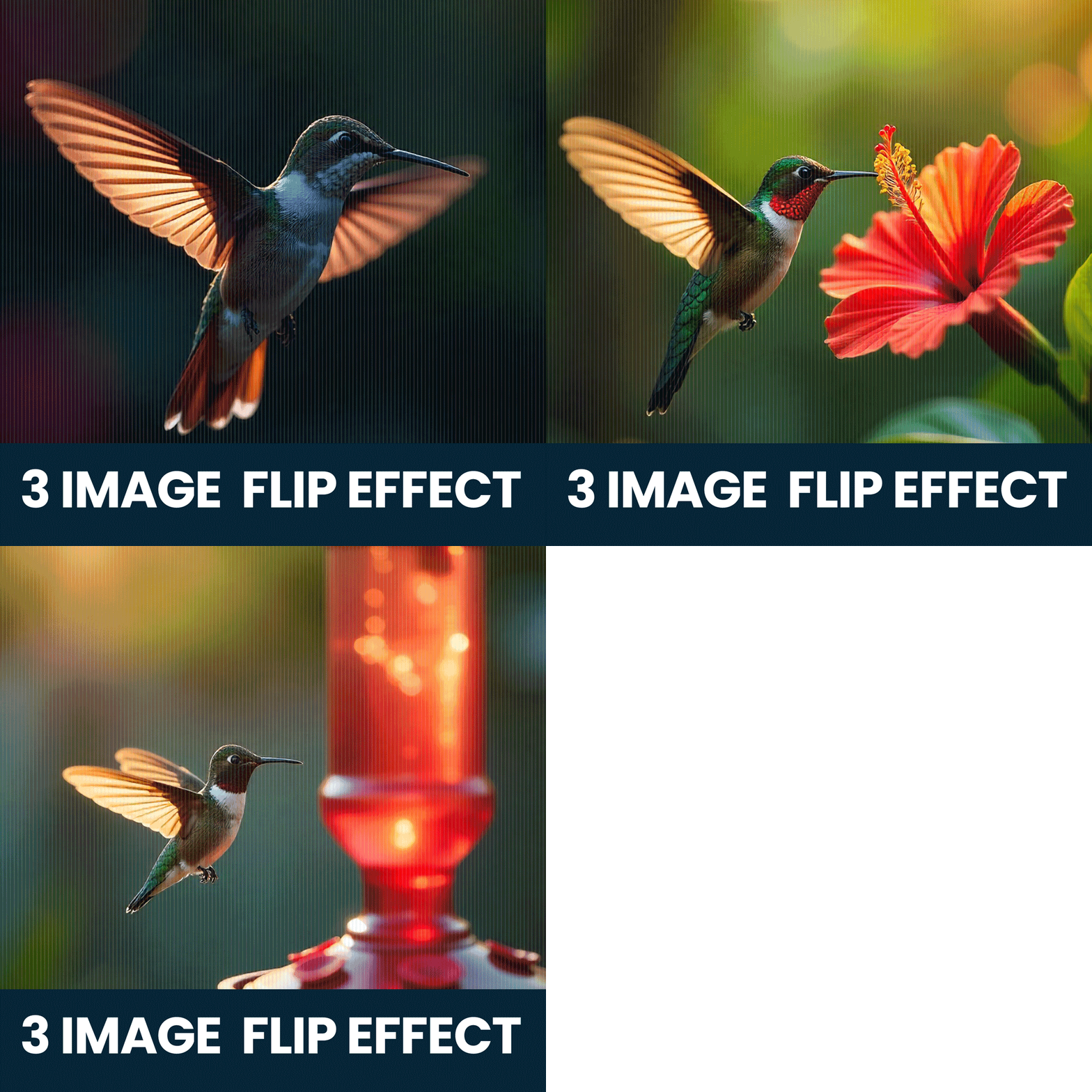


Everyone loves a surprising new toy. Lenticular cards deliver just that into your customer's hands - Every. Single. Time.
They will capture your client's attention and build a compelling personal connection - your customers will never be able to forget you or your brand.
The lenticular card is one of the most exciting and affordable mediums in marketing. They are made by interlacing two or more images onto the unique surface of the plastic or paper card. This creates depth and motion effects when you turn the card. The images seemingly blend and morph into one another through movement, animating a story in two or three flips.
The potential uses are endless - being able to communicate various advertising messages through one small piece of plastic. Texts, slogans, pictures with different sequences, and more. It's almost like watching a short film come to life, right in front of your eyes.
Lenticular cards are wildly popular choice for lanyard inserts, event and gift cards, postcards, business cards, and more. Let us know the message you want to convey, and our design team at Creative Plastic Cards will get to work, creating the ultimate lenticular card for your precise requirements.
Available Effects: Flip (2-3 images), 3D Effect, Animation (7-10 images), Morphing
LPI (Lines per Inch): 75 LPI, 100 LPI, 160 LPI, 180 LPI
Printing: UV Offset Printing
Variable Data: Barcodes, Numbering, QR Codes
Colours: CMYK
Bottom Layer: Paper, PVC
Customisable: Lenticular cards can be made in any shape and size.
MOQ: 100pcs
FLIP:
Depending on the viewing angle, 2 to 3 different pictures are displayed, changing abruptly rather than smoothly. The best effects are achieved by using two images with similar colours. While it's possible to use contrasting images, this may cause both images to partially appear simultaneously. The pictures change when moving up-and-down (lenses horizontal) or left-to-right (lenses vertical), with better results typically achieved with up-and-down movement.
3D:
A sense of depth is created by layering flat elements at varying distances from the viewer’s eyes. To achieve the best possible effect:
- Layers must be "full" (without "holes" behind cut elements).
- The background layer should include as many contrasting details as possible (patterns). The 3D effect cannot be created on a plain background.
- Elements on different layers should partially overlap to intensify the illusion of depth.
- Important details should be placed on the "zero" layer, ensuring they are sharp and legible (elements in front of or behind this layer may appear slightly blurred).
- The design should not be too dark. Light, vibrant, and "warm" colours should be used in the foreground.
- The font should not be too small (this rule applies to all text on lenticular foil).
- The design must include "bleed," especially on the left and right sides. The size of the "bleed" depends on the design, the overall size of the print, and the intended depth.
ANIMATION:
This effect is suitable for displaying several or more sequences of movement. The final effect creates a smooth transition of scenes, similar to a short movie.
MORPHING:
Images gradually transform from one to another. The best results are achieved by using the same background and similar shapes for both objects.